"So you're a linguist—how many languages do you speak?" That's one of the typical reactions you get when you reveal to someone that you're a linguist. But describing as many languages as possible in the form of grammars or dictionaries is only a tiny part of what linguistics as a scientific discipline deals with.
Many people do not have a clear idea of what linguistics actually is and what linguists actually do. As a linguist myself, I find it fascinating that by producing sounds and gestures, we are able to share the most complex thoughts and private feelings with each other seemingly effortlessly. In this blog post, I want to use an example to illustrate the methodological diversity with which linguistics investigates this miracle. Here is the example:
A asks: How many students were there this morning? and B replies: Not all of them were present.
With B's answer, one can link two very different situations. We are dealing with linguistic ambiguity. Here are the situations:


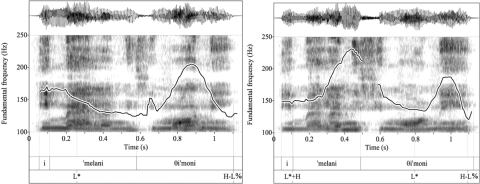
For the interpretation, the intonation, or prosody, with which we articulate the utterance, is crucial. If, for example, the main stress is on all, we think of an empty classroom, but if we have a rising and falling pitch that does not drop again, we imagine that someone was probably present, but not all of the students. Linguistics examines all levels of language and explains how the connection between the sound pressure wave produced and the interpretation of meaning and communicative usage works. This is where the comparative analysis of different languages comes into play, for example, languages such as Greek, a language in which prosody alone distinguishes between the statement "Melanie is getting angry" and the question "Is Melanie getting angry?". The different prosody of the Greek utterance η Мέλανη θυμώνει is shown above in the fundamental frequency curve (from Themistocleous, 2025).
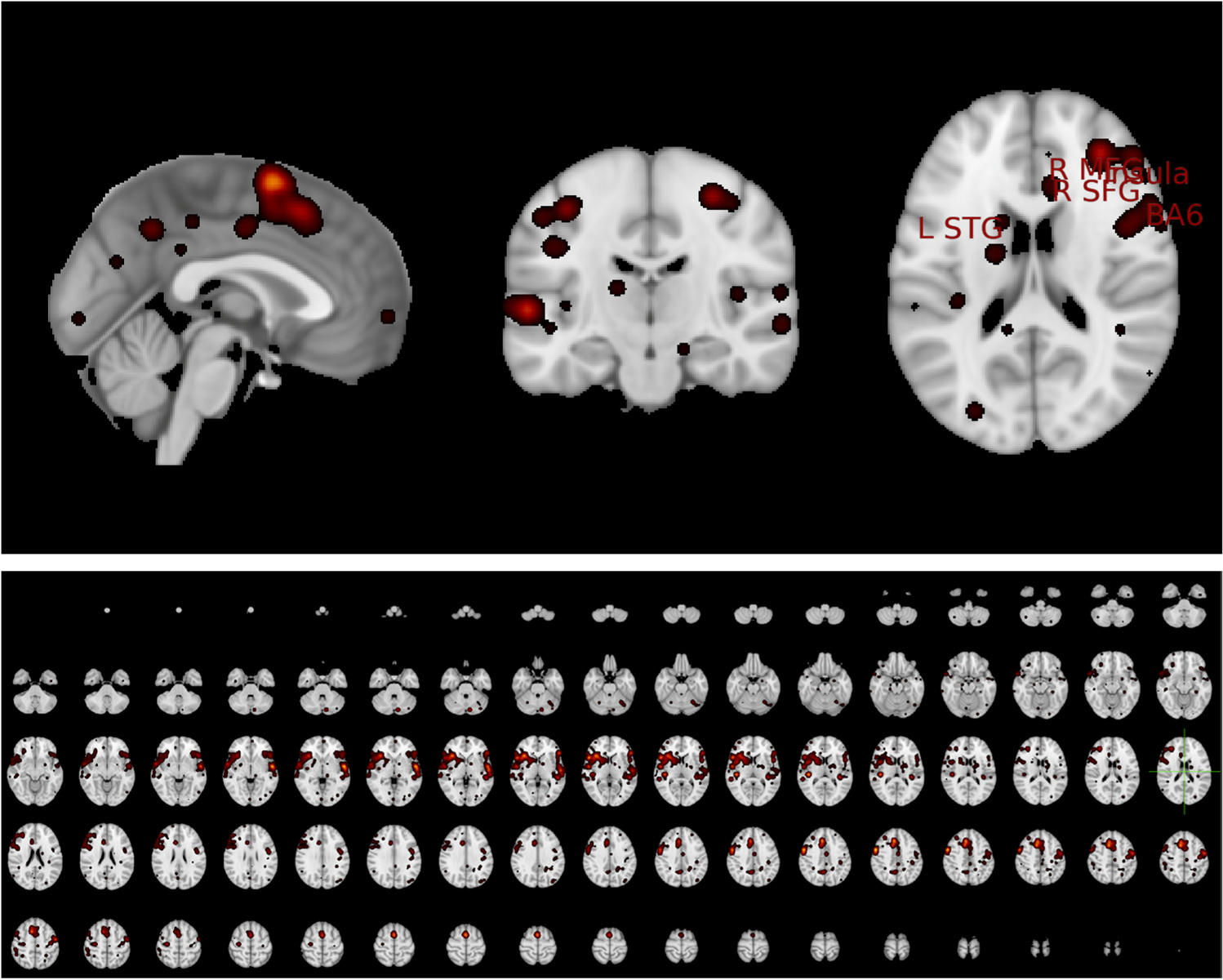
This only covers part of the linguistic disciplines. Psycholinguistics and neurolinguistics examine the cognitive and neural foundations of speech production and comprehension. In a recently published meta-study, Themistocleous (2025) shows that the left hemisphere of the brain is especially involved in processing linguistic aspects of prosody (see figure on the left). In sociolinguistics, on the other hand, the social dimensions come to the fore. What identity-forming elements are contained in the specific intonation we use in our peer groups? Another central area in linguistics is the modeling of language and speakers in computational linguistics. The boom in large language models such as ChatGPT and the like directly proves their relevance. For a long time, synthetic speech sounded artificial, but now we are surrounded by deceptively real synthetic speech. Finally, in clinical linguistics, scientists deal with speech disorders and their treatments. Disordered prosody is a key feature of some forms of pathological speech impairment. In addition to these disciplines, there are many others.
All of these linguistic disciplines and perspectives are represented here at Sprachschmiede. Take a look at one of our projects to experience for yourself how diverse linguistic research is.